


A hard frost can turn a dripping outside tap into a split pipe overnight. The best way to stop pipes freezing in Hertfordshire and Essex homes is to insulate pipes in cold spaces like lofts, garages and outside walls, keep some heat in the house during cold snaps, and know where your stopcock is before you need it. If a pipe does freeze or burst, our plumbing team can help put things right.
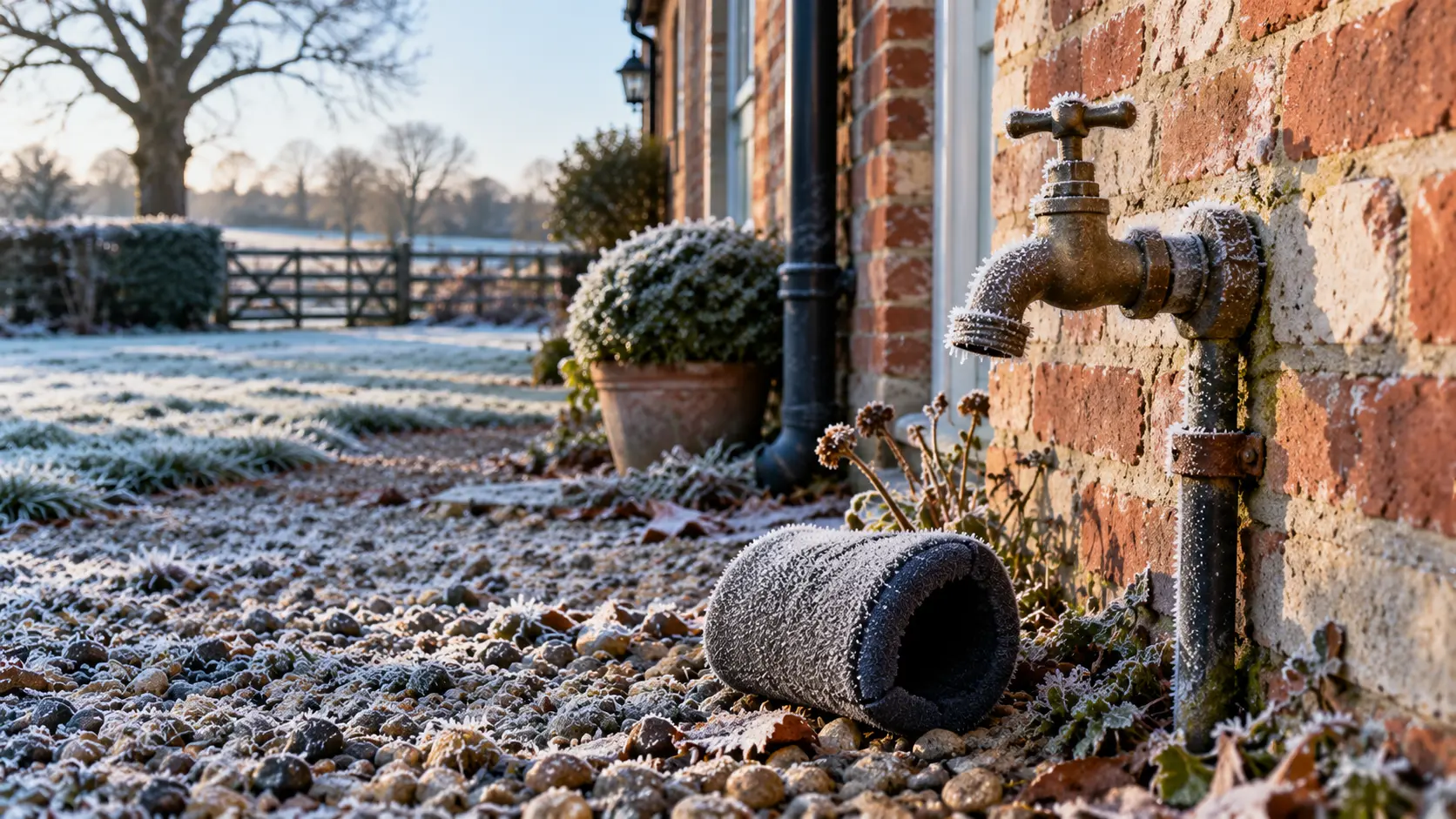
Which pipes are most at risk
Pipes freeze where cold air reaches them and warm air doesn’t. Check:
- Loft pipework and cold water tanks, especially above well-insulated ceilings where little heat rises
- Outside taps and the pipe feeding them
- Pipes in garages, outbuildings and utility rooms
- Pipes running along outside walls or under suspended timber floors
- Condensate pipes from condensing boilers that run outside
Simple ways to prevent frozen pipes
Insulate exposed pipes
Foam pipe lagging is cheap and easy to fit on accessible pipes. Make sure the joints and bends are covered too, as gaps leave weak spots. In the loft, insulate the cold water tank as well, but leave the area directly under it uninsulated so some warmth can reach it from below.
Deal with outside taps
Turn off the isolating valve inside the house if there is one, then open the outside tap to drain it. An insulated tap cover adds protection. If there’s no isolating valve, it’s worth having one fitted.
Keep some heat in the house
During a cold spell, keep the heating on a low background setting, even if you’re out or away. Many boilers and thermostats have a frost protection setting, which turns the heating on if the temperature drops very low.
Let warm air reach cold spots
Opening the loft hatch for a while in very cold weather lets warmer air into the loft. Leaving cupboard doors open under sinks on outside walls helps too.
Fix drips
A dripping tap or overflow can freeze and block a pipe. Getting small leaks repaired before winter removes that risk.
Know where your stopcock is
The stopcock turns off the mains water to the house. It’s often under the kitchen sink, but it can be in a cupboard, under the stairs or under a floorboard. Find it now, check it turns, and make sure everyone at home knows where it is. If it’s stiff or seized, get it replaced before an emergency rather than during one.
If a pipe freezes
- Turn off the water at the stopcock
- Open the tap the pipe feeds, so water can escape as it thaws
- Warm the pipe gently with a hot water bottle, warm towels or a hairdryer on a low setting, starting from the tap end
- Never use a blowtorch or naked flame
If you can’t reach the pipe or aren’t confident, call a plumber.
If a pipe bursts
- Turn off the water at the stopcock straight away
- Switch off the heating and, if it’s safe, drain the system by running the cold taps
- If water is near electrics, switch off the electricity at the consumer unit if safe to do so
- Move valuables and catch what water you can
- Call a plumber and let your insurer know
Winter in Hertfordshire and Essex
Older cottages and farmhouses around Saffron Walden, Dunmow and Buntingford often have pipework in unheated outbuildings, utility rooms or under timber floors, which makes them more exposed in a cold snap. Condensing boilers can also stop when their condensate pipe freezes. If that happens, our boiler service and repairs team can help.
Frequently asked questions
What temperature do pipes freeze at?
Water freezes at 0°C, but pipes in sheltered spots may not freeze until it’s colder outside for a while. Exposed pipes in lofts, garages and outside walls are the first to go. A prolonged cold spell, especially with wind, is when frozen pipes become much more likely.
Should I leave the heating on when I go away in winter?
Yes, on a low setting or using the frost protection mode. It doesn’t need to be warm, just warm enough to stop pipes in colder parts of the house freezing. For longer trips, some people also turn off the water at the stopcock.
How do I know if a pipe is frozen?
The usual sign is a tap that gives little or no water while others work. You might see frost on the pipe or a bulge. Check pipes in cold areas carefully, and look for splits before thawing, as a frozen pipe can leak once the ice melts.
Worried about your pipes this winter?
If you’d like exposed pipes lagged or a stiff stopcock replaced before the cold weather, give us a call on 01279 771981 or drop us a message and we’ll get it sorted.