


If you live in Dunmow, you’ll know just how quickly the temperature can drop once autumn turns properly cold. One minute the house feels comfortable, the next you’re reaching for another jumper and wondering why the radiators aren’t doing their job. Over the years we’ve helped plenty of local homeowners deal with heating problems that Dunmow throws up every winter, and the truth is most systems give you warning signs before they fail completely.
Spotting those early signs central heating breaking down can save you money, stress and a freezing weekend waiting for an emergency callout. In this guide I’ll talk you through what to look out for, what you can check yourself and when it’s time to call in a professional.
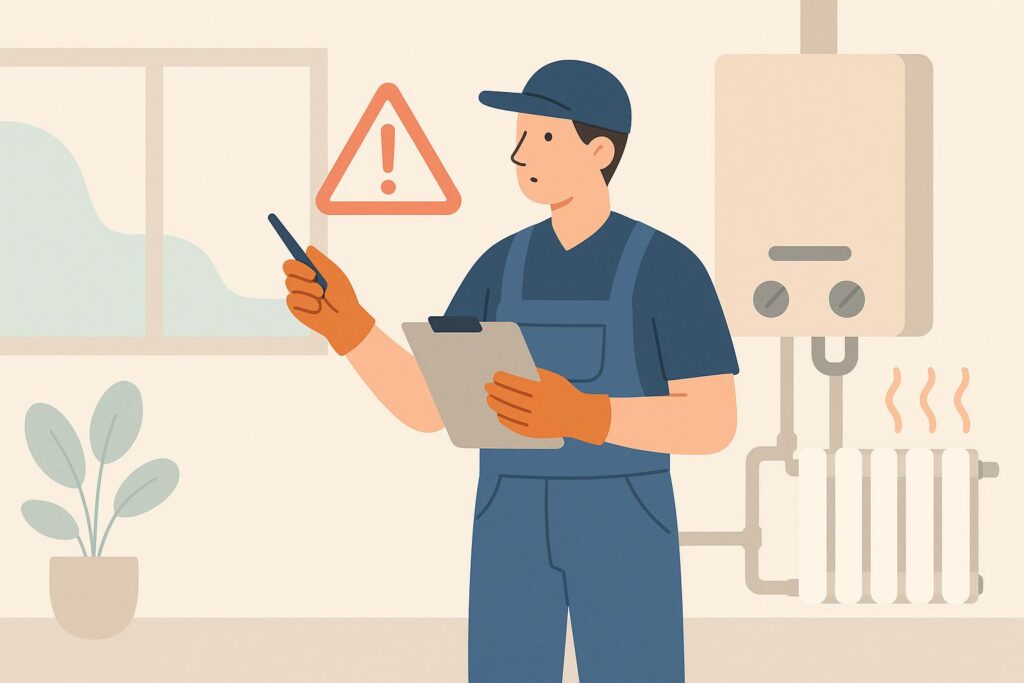
Common Warning Signs Your Central Heating Is Struggling
Your radiators aren’t heating up properly
If you’ve got one radiator that’s cold at the top and warm at the bottom, that’s usually trapped air. If it’s cold at the bottom and warm at the top, that can point to sludge build-up. We see this a lot in older properties around Dunmow where the system hasn’t been flushed in years.
When multiple radiators stay lukewarm even though the thermostat is turned up, it can be a sign of circulation issues, pump problems or a boiler that’s losing efficiency.
Strange noises from the boiler or pipes
Boilers shouldn’t bang, whistle or gurgle. A slight hum is normal. Loud kettling noises often mean limescale has built up inside the heat exchanger. Gurgling pipes can be trapped air. Banging when the heating comes on might suggest pressure problems.
One customer in Dunmow described it as “sounding like someone’s dropping marbles in the loft”. That sort of noise is worth getting checked sooner rather than later.
Your boiler keeps losing pressure
If you’re topping up the pressure every few weeks, something’s going on. It could be a small leak on the system, a faulty pressure relief valve or an issue inside the boiler itself. Pressure shouldn’t just disappear.
This is one of the most overlooked signs that central heating is breaking down as many homeowners think it’s normal maintenance. It isn’t.
Your heating bills are creeping up
If your usage hasn’t changed but your bills have, your boiler may be working harder than it should. As parts wear out or sludge builds up, efficiency drops. The system runs longer, costs more and delivers less heat.
The thermostat isn’t responding properly
You turn it up but nothing happens. Or the house overheats well past the set temperature. Sometimes it’s just a faulty thermostat, sometimes it’s a sign of deeper electrical or boiler control issues.
The boiler switches itself off
If your boiler keeps locking out or resetting, that’s a clear red flag. Modern boilers have safety features that shut them down when something isn’t right. Repeated lockouts are not something to ignore.
What To Do If You Notice These Warning Signs
First, don’t panic. Not every issue means a full replacement.
There are a few simple checks you can carry out safely:
- Check the thermostat batteries
- Bleed upstairs radiators if they’re cold at the top
- Make sure the boiler pressure sits between 1 and 1.5 bar when cold
- Look for obvious leaks around radiators or valves
If those basics don’t fix it, that’s the point to bring in a qualified heating engineer. The earlier you deal with heating problems iDunmow homes are experiencing, the less likely it is to become a bigger job.
We often get calls where someone has ignored odd noises for months. By the time we arrive, a relatively simple fix has turned into a bigger repair because the system has been under strain.
Repair Or Replace: How To Decide
This is probably the most common question we’re asked in customers’ kitchens: “Is it worth fixing, or should we just replace it?”
When a repair usually makes sense
If your boiler is under 8 to 10 years old and has been serviced regularly, repairs are often sensible. Pumps, valves and thermostats are replaceable parts. A poor performing system might just need a powerflush or new controls.
If the cost of repair is reasonable and the boiler is otherwise in good condition, keeping it running can be the right call.
When replacement may be the better option
If your boiler is over 12 to 15 years old, parts are becoming harder to source or you’re calling for repairs every winter, it may be time to think longer term.
Older boilers are less efficient and that shows in your energy bills. Newer systems are quieter, more controllable and generally more reliable. We always look at the full picture rather than pushing a new install where it’s not needed.
Sometimes homeowners in older Dunmow properties are surprised to find the boiler has been oversized for years. Correct sizing and modern controls can make a noticeable difference to comfort and running costs.
Frequently Asked Questions
How often should I service my boiler?
Once a year. Annual servicing helps catch early signs that central heating is breaking down before they develop into full failures. It also keeps warranties valid and ensures the system is running safely.
Why do my radiators need bleeding so often?
If it’s happening regularly, there may be air entering the system or corrosion producing gases inside the pipework. It’s worth investigating rather than just bleeding them every few weeks.
Can I ignore minor noises?
Small changes in sound are often the first sign something isn’t right. They rarely fix themselves. Getting them checked early is usually far cheaper than waiting.
What’s the biggest mistake homeowners make?
Waiting until the boiler completely breaks down in the middle of winter. By then you’re dealing with emergency availability, cold weather demand and extra stress. Acting earlier gives you more options.
Final Thoughts
Your central heating system nearly always gives you clues before it fails. Strange noises, uneven radiators, rising bills and pressure drops are all signs central heating is breaking down. Paying attention early can prevent bigger disruption later.
If you’re experiencing heating problems that Dunmow homeowners commonly face, or you just want peace of mind before winter sets in, it’s worth having the system checked properly. Harpers Heating & Plumbing regularly helps homeowners across Dunmow, Takeley, Sawbridgeworth, Harlow, Saffron Walden, Bishop’s Stortford, Essex, keep their heating running reliably. At Harpers Heating & Plumbing we focus on honest advice, practical solutions and fixing what needs fixing without unnecessary work.
If something doesn’t feel quite right with your heating, don’t wait for a total breakdown. Book a heating check.