


The running cost depends on how much electricity the unit uses while running, how many hours it runs, and your electricity unit price. The simple way to estimate it is: power used (kW) × hours of use × your price per kWh. A modern split system cooling a single bedroom for a few hours on a warm evening typically uses far less than people expect, while running several units all day in a heatwave adds up quickly.
Your own figures matter more than any average. Check the unit’s rated input power in its specification and the unit rate on your electricity bill, and you can work out a realistic cost. Our air conditioning page explains the efficient systems we fit.
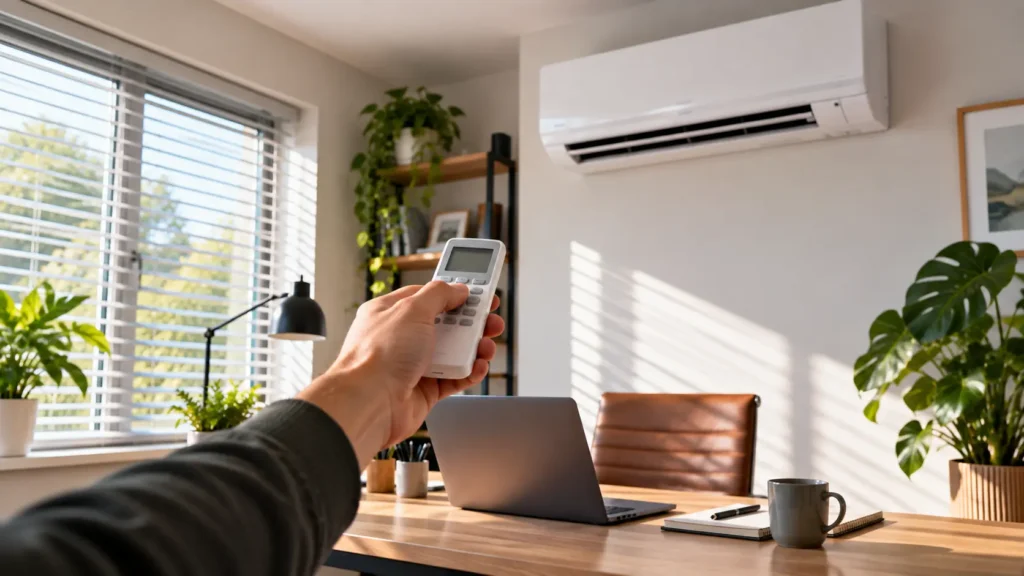
How to estimate your running costs
- Find the input power in kW on the unit’s specification sheet (not the cooling capacity, which is a different figure)
- Estimate hours of use per day
- Check your electricity unit rate on your bill (pence per kWh)
- Multiply them: kW × hours × unit rate
Inverter units don’t run at full power all the time. Once the room reaches the set temperature, they slow down, so actual use is often below the rated maximum.
What affects running costs
| Factor | Effect |
| Room size and insulation | Larger or poorly insulated rooms need more cooling |
| Sun and glazing | South-facing and glazed rooms gain more heat |
| Set temperature | Setting it very low makes the unit work harder |
| Hours of use | The biggest single factor |
| Unit efficiency | Higher-rated inverter units use less energy |
| Correct sizing | Undersized units run flat out; oversized units cycle inefficiently |
| Maintenance | Dirty filters reduce efficiency |
Ways to keep costs down
- Set a sensible temperature, a few degrees below outside is usually comfortable
- Close curtains and blinds on sunny windows during the day
- Keep doors and windows shut while it’s running
- Use timers so it runs before bedtime, not all day
- Clean filters regularly as the manufacturer recommends
- Choose an efficient, correctly sized unit in the first place
Air con vs fans and portable units
Fans use very little electricity but only move air; they don’t lower the temperature. Portable air conditioners are generally less efficient than fixed split systems and vent warm air through a hose, which can reduce their effectiveness. A properly installed split system is usually more comfortable and efficient for regular use.
Using air con for heating
Many split systems also heat. In heating mode, they work as air-to-air heat pumps and can deliver several units of heat for each unit of electricity used. That can make them a cost-effective way to warm a single room in spring and autumn. Our pages on renewables and air conditioning in Dunmow cover the options.
Running costs in Hertfordshire and Essex homes
Loft conversions and extensions around Saffron Walden, Dunmow and Bishop’s Stortford often need cooling for relatively short periods on hot days. In those cases, running costs tend to be modest. Homes wanting several rooms cooled through long hot spells will see higher bills, so it’s worth sizing the system carefully.
Frequently asked questions
Is it cheaper to leave air con on all day?
Usually not. It’s generally more efficient to use timers and run it when needed, though inverter units handle steady running well. Pre-cooling a room before bedtime is often a good balance.
Does air con use more electricity than a fridge?
While running, yes, but a fridge runs all year while air con is typically used on warmer days only. Actual cost depends on hours of use.
Can solar panels offset air con costs?
Yes. Hot, sunny days are when solar panels generate most, so they can cover much of the running cost of daytime cooling.
Get advice on efficient air conditioning
If you’d like a hand choosing an efficient system for your home, ring us on 01279 771981 or send us a message and we’ll help you find the right fit.