


An oil tank needs attention if you see cracks, bulges, whitening or discolouration on a plastic tank, rust or weeping seams on a steel tank, a damaged or sinking base, water collecting in the bund, a strong smell of oil or unexplained oil loss. Any of these can lead to a leak, and oil spills can be expensive to clean up and harmful to the environment.
A quick visual check every few months, plus a professional inspection at the annual boiler service, catches most problems early. Our oil installations page explains the tanks and systems we fit.
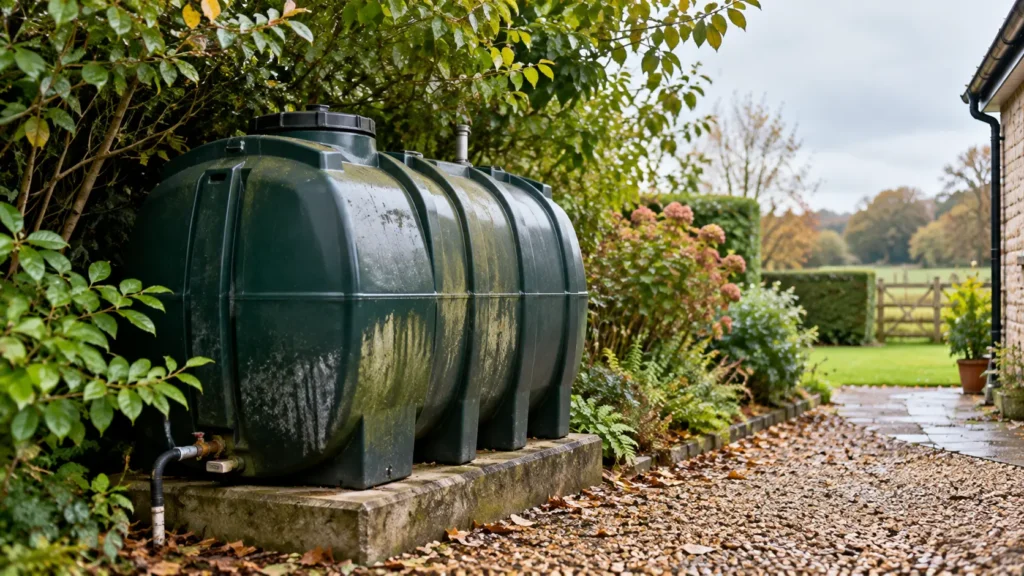
Warning signs on plastic tanks
- Cracks or splits, especially around fittings and the base
- Bulging or distortion of the tank walls
- Whitening or discolouration, which can indicate UV degradation
- Stress marks around the inlet and outlet
- Fittings that weep oil
Warning signs on steel tanks
- Rust patches, particularly on the base and seams
- Weeping or staining along welds
- Flaking paint exposing bare metal
- Corroded legs or supports
Check the base and surroundings
The tank’s base should be solid, level and larger than the tank itself. Look for:
- Cracks or sinking in the base
- Plants growing close to or under the tank
- Debris or water collected in the bund (for bunded tanks)
- Damaged pipework or supply lines between the tank and boiler
Signs of a leak
- A strong smell of heating oil around the tank or garden
- Oil staining on the ground, walls or base
- Dead or discoloured vegetation near the tank
- Using oil faster than normal without a change in heating
If you suspect a leak, turn off the supply valve if it’s safe, contain the oil with absorbent material if you can, keep it away from drains and watercourses, and get professional help. Your home insurer may also need to be told.
Seasonal checklist
| When | Check |
| Every few months | Visual check of tank, base, fittings and bund |
| Before winter | Oil level, supply line, tank condition, boiler service |
| After storms | Fallen branches, damage to the tank or pipework |
| Annually | Professional inspection alongside the boiler service |
When does an oil tank need replacing?
There’s no fixed lifespan. It depends on the tank’s material, quality, exposure and how well it’s been maintained. Replacement is usually recommended if the tank shows structural damage, repeated leaks or significant deterioration. A replacement tank must meet current regulations on siting and bunding, which a competent installer, ideally OFTEC registered, will follow.
Tanks in rural Hertfordshire and Essex
Many homes around Saffron Walden, Dunmow, Takeley and Buntingford rely on oil. Older single-skin tanks are still common, and when replacement is due, a bunded tank is often required depending on the location and capacity. If you’re weighing up whether to stay with oil, our guide on oil boiler vs heat pump for rural Essex homes compares the options.
Keeping your oil boiler serviced every year also means the technician can look over the tank and supply line. See our boiler service and repairs page.
Frequently asked questions
What is a bunded oil tank?
A bunded tank has an outer skin that holds oil if the inner tank leaks. It reduces the risk of a spill reaching the ground or drains.
Do I need a bunded tank?
It depends on the tank’s capacity and location, such as distance from drains, watercourses and buildings. A competent installer will assess the site against current regulations.
Is an oil leak covered by home insurance?
Many policies cover oil leaks, but some require the tank to be well maintained. Check your policy and keep maintenance records.
Worried about your oil tank?
If your tank’s looking tired or it’s due a check, give us a call on 01279 771981 or drop us a message and we’ll come out and take a look.