


Spotting a puddle under your boiler is never a good start to the day. We get calls from homeowners across Chelmsford, Stansted and Buntingford asking the same thing: “Is this serious, or can it wait?” In most cases, a leak needs attention sooner rather than later. If left, it can damage internal parts, lower pressure and even ruin kitchen cupboards or flooring.
If you’re already searching for boiler repair services, you’re probably worried it’s something major. The good news is that not every leak means a full replacement. Let’s run through what to do first, what commonly causes it and when it’s time to call in a professional.
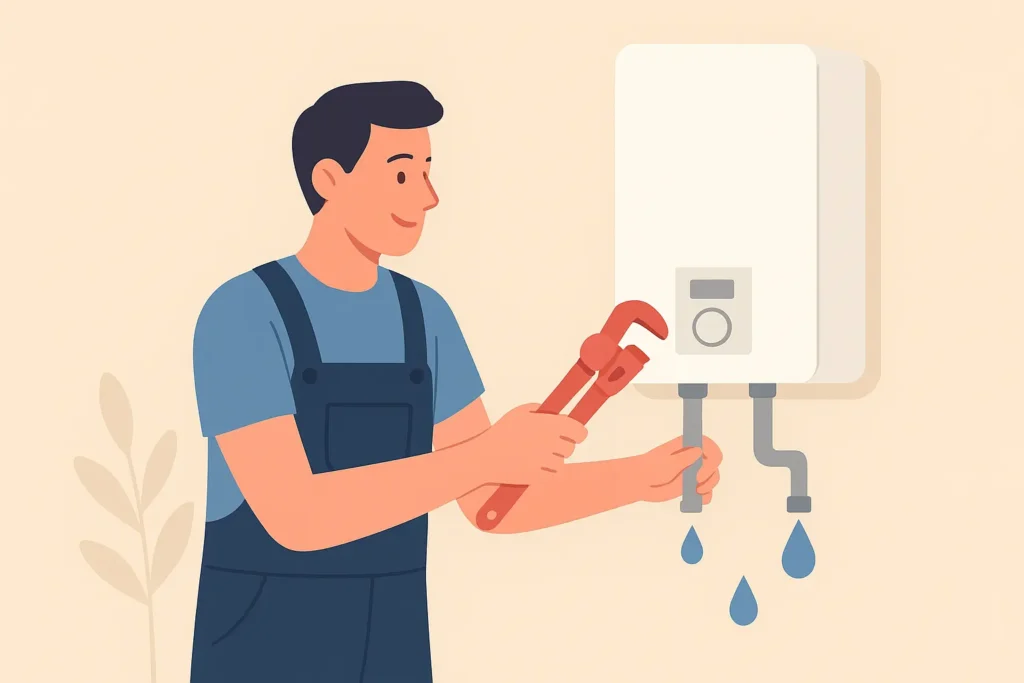
What to Do If Your Boiler Is Leaking Water
The first step is simple: stay calm and don’t ignore it.
If you notice water dripping or pooling beneath the boiler:
- Turn the boiler off at the controls.
- Switch off the water supply to the boiler if you know where the isolation valve is.
- Put a towel or container down to catch any water.
- Check the pressure gauge on the front of the boiler.
If the pressure has dropped below 1 bar, that often ties in with a leak somewhere in the system. If it’s unusually high, that’s also a clue. Either way, avoid constantly topping it up. That tends to make things worse.
One thing we always say to customers is this: never take the case off the boiler yourself. Modern boilers are sealed units. Inside components should only be touched by a Gas Safe registered engineer.
Common Causes of a Leaking Boiler
Leaks can come from several places. Some are straightforward. Others point to wear and tear inside the boiler.
1. Corroded or Worn Internal Components
Over time, seals and joints inside the boiler can degrade. We often see this in older systems that haven’t been serviced regularly. A small split seal or cracked heat exchanger can allow water to seep out.
In hard water areas around parts of Essex and Hertfordshire, limescale can also contribute to internal corrosion.
2. High Boiler Pressure
If your pressure gauge is creeping above 2.5 or 3 bar, the system may release water to protect itself. This usually comes out through the pressure relief valve and runs outside via a small copper pipe.
We’ve been to properties in Chelmsford where customers thought their boiler was leaking internally, but the issue was actually high pressure caused by overfilling.
3. Faulty Pressure Relief Valve
If this valve is worn or blocked with debris, it can drip even at normal pressure. You might notice a steady trickle from the external pipe.
4. Leaking Pump Seal
On older boilers or system boilers, the pump seal can fail. This often shows as water around the centre of the unit. It’s not something you can repair with a bit of tape or sealant, despite what some online forums suggest.
5. Loose Connections or Pipe Joints
Sometimes the leak isn’t the boiler at all. It could be a compression joint on the pipework above or below the unit. In airing cupboards especially, a small drip can travel down and appear as though it’s coming from inside.
6. Cracked Heat Exchanger
This is one of the more serious causes. If the main heat exchanger is cracked, repair might not be cost effective, particularly on an older appliance. At that point, it’s worth considering a replacement, such as a modern Worcester boiler, which comes with strong manufacturer guarantees.
Can You Fix a Leaking Boiler Yourself?
There’s a clear line here.
You can safely:
- Check the pressure gauge.
- Inspect visible pipework for obvious drips.
- Dry the area and monitor where the water reappears.
You should not:
- Remove the boiler casing.
- Tamper with internal valves or seals.
- Attempt to replace parts yourself.
We’ve attended jobs in Dunmow, and Harlow where well meaning DIY attempts ended up increasing the repair cost. Boilers are gas appliances. Safety has to come first.
When to Call a Professional Heating Engineer
If the leak is ongoing, the pressure keeps dropping, or you’re unsure of the source, it’s time to get it checked properly.
Call a heating engineer if:
- Water is actively dripping from inside the casing.
- The boiler keeps losing pressure after topping up.
- You see error codes on the display.
- The boiler is over 10 years old and hasn’t been serviced regularly.
An experienced engineer will trace the source properly rather than guessing. Sometimes it’s a straightforward seal replacement. Other times we’ll advise that investing in a new system makes more financial sense, especially if parts are obsolete. If that’s the case, you can explore options for boiler installations that offer better efficiency and lower running costs.
How to Prevent Future Boiler Leaks
The best way to avoid leaks is regular maintenance. It sounds simple, but annual servicing really does make a difference.
During a proper service, an engineer will:
- Check seals and internal components for early wear.
- Test the pressure relief valve.
- Inspect for corrosion.
- Ensure the system pressure is correctly set.
We often spot small issues during routine services that would have turned into leaks months later. It’s far cheaper to replace a seal during a service than deal with water damage under a kitchen worktop.
If your boiler is boxed in tightly, make sure there’s adequate ventilation and easy access for servicing. Engineers should never have to dismantle cupboards just to remove the front panel.
In short, a leaking boiler isn’t something to ignore, but it isn’t always a worst case scenario either. The key is quick action and proper diagnosis. If you’re experiencing ongoing issues or want peace of mind from a professional inspection, the team at Harpers Heating & Plumbing can help.
Contact us today to arrange boiler repairs.