


An air source heat pump takes heat from the outside air, even in winter, and uses a compressor and electricity to raise it to a temperature that can heat your radiators and hot water. It typically delivers several units of heat for each unit of electricity used, which is why it’s promoted as a low-carbon alternative to gas and oil.
A heat pump can work in many homes, but it needs the right design: reasonable insulation, radiators sized for lower water temperatures, space for an outdoor unit and usually a hot water cylinder. Our renewables page explains how we assess homes.
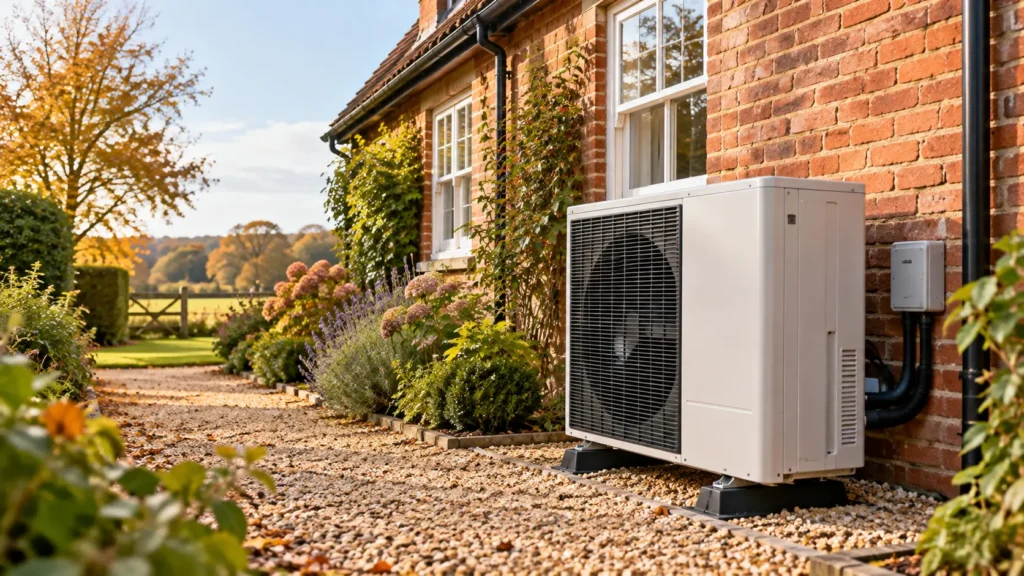
How an air source heat pump works
- A fan draws outside air across a heat exchanger containing refrigerant
- The refrigerant absorbs heat and evaporates, even at low outdoor temperatures
- A compressor raises the pressure and temperature of the refrigerant
- The heat passes into the water for your heating and hot water
- The cycle repeats
It’s the same principle as a fridge, working in reverse.
Why lower flow temperatures matter
Heat pumps are most efficient when heating water to lower temperatures than a traditional boiler. That means:
- Radiators may need to be larger to deliver the same heat
- The heating runs for longer at a gentler temperature
- Good insulation helps the home hold that steady warmth
This is why a room-by-room heat loss calculation is an essential part of a proper heat pump design.
What makes a home suitable
| Factor | What helps |
| Insulation | Loft and cavity wall insulation, draught-proofing |
| Radiators | Correctly sized for lower flow temperatures |
| Hot water | Space for a cylinder |
| Outdoor space | A suitable spot for the unit with good airflow |
| Electrical supply | Checked during the survey |
Heat pumps vs oil boilers in rural Essex
Many rural homes around Saffron Walden, Dunmow and Takeley rely on oil. When an oil boiler needs replacing, a heat pump is one of the main alternatives, alongside a new oil boiler. Our guide on oil boiler vs heat pump for rural Essex homes goes into that comparison in more detail.
The right choice depends on the property’s insulation, the budget for upgrades and how long you plan to stay.
Running costs and grants
Running costs depend on the system’s design, your electricity tariff and how well the home holds heat. A well-designed system can compare favourably with oil and LPG. A poorly designed one can disappoint.
In England and Wales, the Boiler Upgrade Scheme has offered grants towards heat pumps installed by MCS-certified installers, replacing fossil fuel systems. Check current eligibility and grant amounts on GOV.UK. Our finance options can also help spread the cost.
What installation involves
- A survey and heat loss calculation
- Siting the outdoor unit
- Installing a hot water cylinder, if needed
- Upgrading radiators where required
- Connecting controls and commissioning the system
Installation usually takes several days, depending on the amount of work.
Frequently asked questions
Do heat pumps work in freezing weather?
Yes. Air source heat pumps are designed to work in UK winters. Efficiency falls in very cold weather, which is why correct sizing matters.
Will I need new radiators?
Not always. Some existing radiators may be large enough; others may need upsizing. The heat loss survey shows which.
How long do heat pumps last?
With regular servicing, many manufacturers expect a long working life. Check the specific manufacturer’s guidance and warranty.
Could a heat pump suit your home?
If you’re considering a heat pump, give us a call on 01279 771981 or get in touch online and we’ll arrange a survey.