


If you live in rural Essex or over the border into Hertfordshire, chances are you’re off the gas grid. When your old boiler starts playing up, you’re suddenly faced with a bigger decision than just swapping like for like. Do you stick with oil boiler installation, or is it time to look at a renewable heat source like a heat pump?
I speak to homeowners in Essex, Saffron Walden and Buntingford most weeks who are weighing this up. Some want lower running costs. Others are thinking about the environment. Many just want a reliable system that keeps the house warm without constant tinkering.
Here’s a straightforward, honest comparison to help you decide what’s right for your home.
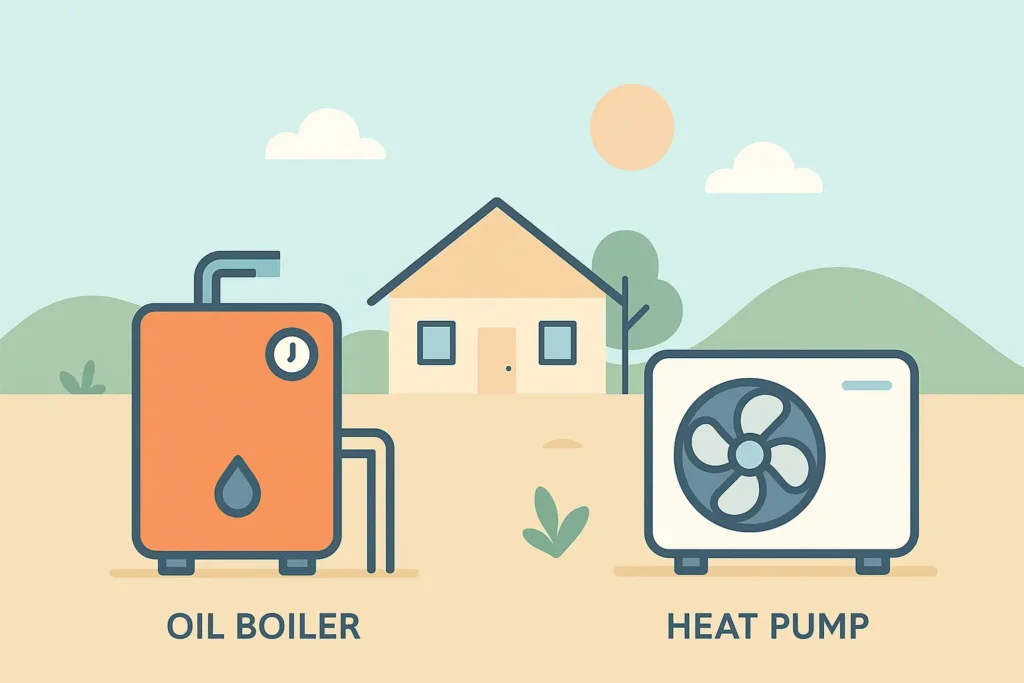
1. The Off Gas Grid Reality
If you’re in villages around Saffron Walden or out towards Takeley and Haverhill, mains gas usually isn’t an option. That leaves oil, LPG or electric based systems such as heat pumps.
Oil has traditionally been the go to choice because it’s powerful, familiar and suits larger rural properties. Heat pumps are becoming more common, especially with government grants available, but they work very differently. Understanding that difference is key before you commit.
2. How Oil Boilers Work in Rural Homes
An oil boiler works much like a gas boiler. It burns heating oil stored in a tank outside your home to create high temperature water. That water feeds your radiators and hot water cylinder.
In older farmhouses or larger detached homes around Essex, oil systems cope well with:
- Bigger radiator networks
- Higher heat loss from older brickwork
- Homes where insulation is not perfect
They’re powerful. If you want rapid heat on a cold January morning when the wind’s coming across open fields, oil will deliver it quickly.
The flip side is you’re tied to oil prices, you’ll need space for a tank and regular servicing is non negotiable.
3. How Air Source Heat Pumps Work
An air source heat pump doesn’t burn fuel. It extracts heat from the outside air and upgrades it to a usable temperature for your heating system. Even in winter, there’s heat in the air.
The big difference is temperature. A heat pump runs at lower flow temperatures than an oil boiler. Instead of blasting water round your radiators at 70 to 80°C, it’s often closer to 35 to 50°C.
That means:
- The system runs for longer periods
- Radiators may need to be larger
- Insulation becomes much more important
When designed properly, they provide steady, comfortable heat. It’s less on and off, more gentle background warmth.
4. Upfront Cost Comparison
In simple terms, oil boilers are usually cheaper to install than heat pumps.
If you’re replacing an existing oil boiler and the tank and pipework are in good condition, it’s normally straightforward. A heat pump installation often involves additional work such as radiator upgrades, cylinder replacement and sometimes electrical upgrades.
However, grants can make a big difference. The Boiler Upgrade Scheme can contribute towards the cost of a heat pump. It’s well worth understanding how that works before ruling anything out.
We always advise homeowners to look at the whole job cost rather than just the headline figure. Cutting corners to save money on a heat pump install usually leads to disappointment later.
5. Running Costs: Oil vs Electricity
This is where things get more nuanced.
Oil prices can fluctuate significantly. Anyone who filled their tank during a spike will remember that uncomfortable bill. Electricity prices have also risen in recent years, so neither option is immune.
An oil boiler is less efficient in pure percentage terms than a heat pump. A well installed heat pump can deliver more heat energy than the electrical energy it consumes. That’s its big strength.
But actual running costs depend on:
- The insulation level of your home
- Your radiator sizing
- Your electricity tariff
- Your oil purchasing strategy
In well insulated properties in areas like Takeley or newer builds around Haverhill, heat pumps can compete very well on running costs. In draughtier period homes with solid walls and limited improvements, oil can still be cheaper to run unless you invest heavily in upgrades.
6. Is Your Home Suitable?
Insulation Matters More Than Anything
If I had to pick one deciding factor, it’s insulation.
Heat pumps thrive in homes with good loft insulation, cavity wall insulation where possible and decent glazing. If your home loses heat quickly, a heat pump will still work but it may struggle to do so efficiently.
Oil boilers are more forgiving. They can blast high temperature water through smaller radiators to compensate for heat loss.
Radiator Size and System Design
Many older rural homes in Essex were fitted with compact radiators sized for high temperature oil systems. Switching to a heat pump often means increasing radiator surface area.
That doesn’t always mean ripping the house apart, but it does require proper room by room heat loss calculations. Guesswork is where problems start.
7. Environmental Considerations
From a carbon perspective, heat pumps come out ahead. They don’t burn fossil fuels on site and as the UK grid continues to decarbonise, their environmental impact improves over time.
Oil is a fossil fuel. Even with modern efficient boilers, it carries a higher carbon footprint.
For some homeowners around Saffron Walden and the wider Essex countryside, reducing carbon emissions is a key driver. For others, reliability and cost come first. Both viewpoints are understandable.
8. The Boiler Upgrade Scheme
The Boiler Upgrade Scheme currently offers a grant towards the cost of installing an air source heat pump.
This can significantly reduce the upfront investment and is one of the main reasons heat pumps are now part of the conversation for off grid homes. The property must meet certain criteria and not every house will qualify without improvements.
If you’re exploring renewables, it’s worth looking at the options carefully and checking eligibility rather than assuming it won’t apply to you.
9. Our Honest Recommendation for Essex Homeowners
There isn’t a one size fits all answer.
If you live in a well insulated home, are planning upgrades anyway and want a lower carbon system for the long term, a heat pump is absolutely worth serious consideration.
If you’re in an older rural property with solid walls, modest insulation and a heating system that’s been built around high temperatures, a modern oil boiler can still be a sensible, reliable choice.
The most important step is a proper survey. Not a quick glance at your boiler and a guess, but detailed heat loss calculations and an honest conversation about how you use your home. Do you work from home all day? Do you like the house very warm? Are you planning renovations?
Across Essex and into areas like Saffron Walden, Takeley, Haverhill and Buntingford, the right answer genuinely varies house by house.
10. Final Thoughts
Choosing between oil and a heat pump isn’t just about technology. It’s about how your specific home performs and what matters most to you, whether that’s upfront cost, long term savings or environmental impact.
At Harpers Plumbing & Heating, we’ve worked on everything from small cottages in rural Essex to large detached homes on the outskirts of town. We’re happy to talk through the pros and cons in plain English, without pushing you either way.
Not sure which is right for you? Talk to our heating experts and we’ll help you make a properly informed decision.