


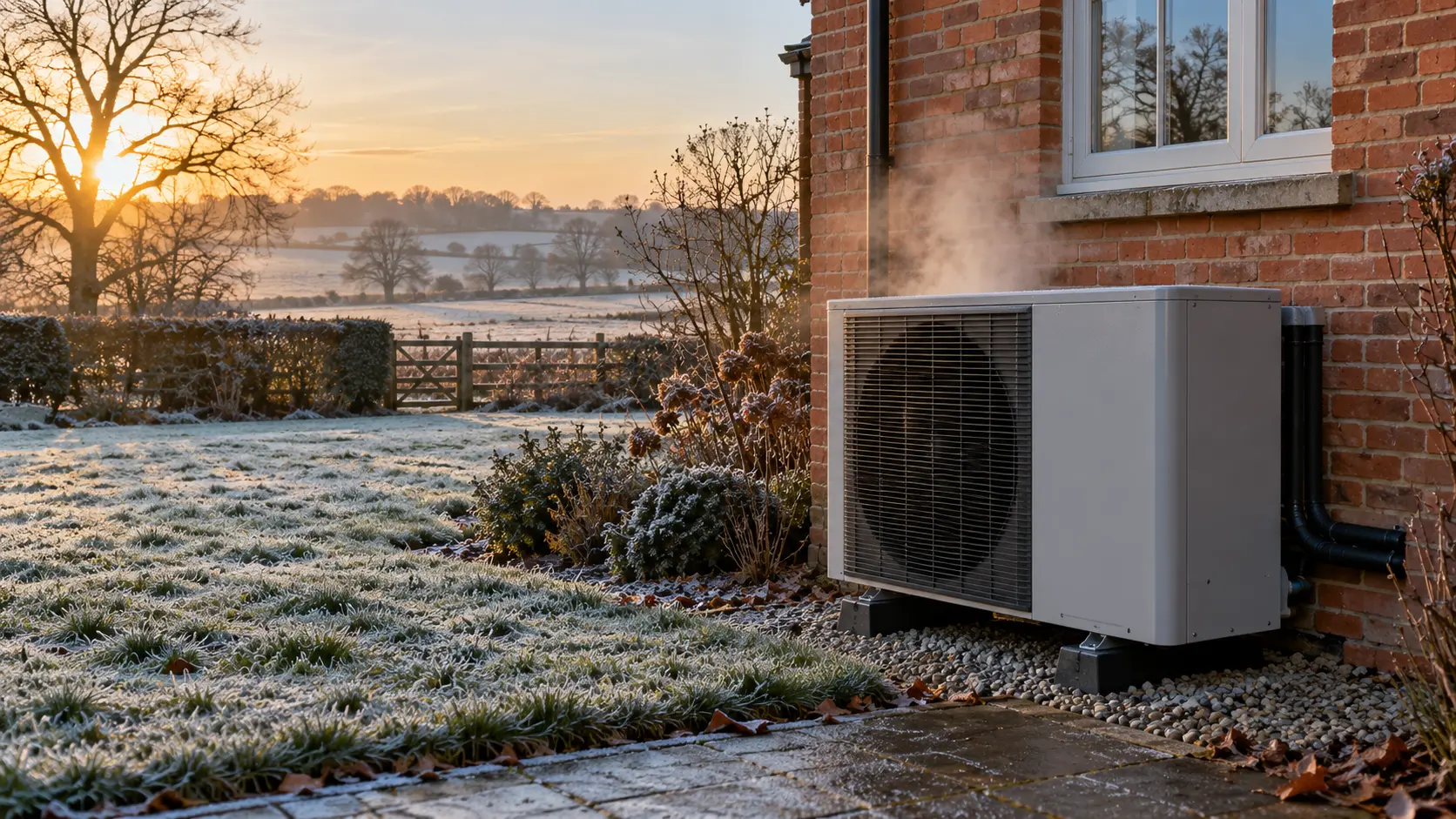
On a still, frosty morning you might spot a cloud of steam drifting off your heat pump and wonder if something’s wrong. Usually it isn’t. An air source heat pump in winter is designed to keep working in cold weather, and steam, light frost and the odd defrost cycle are all normal. The key to keeping a heat pump running well in Hertfordshire and Essex is steady settings, a clear outdoor unit and an annual service. Our renewables page explains the systems we install.
What’s normal in cold weather
Heat pumps behave differently from boilers, which can catch people out in their first winter.
- Steam or vapour from the outdoor unit. This is moisture coming off the coil during a defrost cycle.
- A thin layer of frost on the fins. The unit melts this off automatically.
- Short pauses in heating. During defrost, the unit briefly stops supplying heat to the house.
- Radiators that feel warm rather than hot. Heat pumps work at lower water temperatures and run for longer.
- A change in fan noise as the unit ramps up in colder weather.
How defrost works
When outdoor air is cold and damp, moisture freezes on the outdoor coil. Ice reduces airflow, so the unit runs a defrost cycle, briefly reversing to warm the coil and melt it. This usually takes a few minutes, and then normal heating carries on. It’s built into the design and nothing to worry about.
Don’t chip ice off the coil or pour hot water over it. The fins are delicate, and the unit’s own defrost is the safest way to clear it.
Settings that help in winter
- Leave it running steadily. Heat pumps are most efficient keeping a constant, comfortable temperature. Big setbacks overnight can mean the unit works harder to recover in the morning.
- Use weather compensation if it’s set up. This adjusts the water temperature to suit the outdoor temperature, so the system isn’t running hotter than it needs to.
- Avoid turning thermostats right up to warm the house quickly. A heat pump won’t heat faster; it’ll just use more electricity.
- Keep radiator valves open in rooms you use. Closing lots of them can upset the way the system was designed to run.
If you’re not sure how your controls were set up, ask your installer to talk you through them.
Keeping the outdoor unit clear
- Clear fallen leaves from around and behind the unit in autumn
- Brush away snow from around the base so meltwater can drain
- Keep plants, bins and garden furniture away from the airflow
- Check the condensate drains away freely and doesn’t pool and freeze on a path
Signs it needs an engineer
- A thick block of ice that doesn’t clear after defrost
- The unit running constantly without warming the house
- Error codes on the controller
- Unusual grinding, rattling or banging
- No hot water, or hot water only via the immersion
Work on the refrigerant circuit and electrics should only be carried out by a suitably qualified engineer.
Heat pumps in Hertfordshire and Essex homes
More homes around Saffron Walden, Dunmow and Takeley are moving from oil to heat pumps, and the first winter with a new system is often when questions come up. If you’re still weighing up whether to switch, our guide on oil boiler vs heat pump for rural Essex homes compares the two.
Frequently asked questions
Do heat pumps stop working when it freezes?
No. Air source heat pumps are designed to keep producing heat well below freezing, though their efficiency drops as the temperature falls. A correctly designed system is sized for the cold weather in your area, so it should keep the house comfortable through a normal UK winter.
Is it normal for my heat pump to steam?
Yes. Steam usually appears during a defrost cycle as the unit melts frost from its coil. It can look dramatic on a cold, still morning, but it’s water vapour and a normal part of how the unit works. It should stop after a few minutes.
Should I turn my heat pump off at night?
Usually not. Heat pumps tend to work best with steady settings, keeping the house at a constant temperature. A small setback overnight may suit some homes, but switching off completely often means the system works harder to catch up in the morning. Your installer can advise for your setup.
How often does a heat pump need servicing?
Most manufacturers recommend an annual service, and it’s often a condition of the warranty. The engineer checks the outdoor unit, controls, water pressure, filters and performance. Check your own warranty terms for the exact requirements, and book the service before winter so any issues are sorted before the coldest weather.
Questions about your heat pump this winter?
If your heat pump isn’t keeping the house warm, give us a call on 01279 771981 or drop us a message and we’ll check it over for you.