


If you’re investing in a new boiler installation, it’s worth asking one simple question before the work starts: are you keeping your old thermostat?
I’ve lost count of the number of times I’ve fitted a brand new, high efficiency boiler in homes across Harlow, Bishops Stortford and Sawbridgeworth, only to see it being controlled by a 15 year old dial on the hallway wall. The boiler is state of the art. The control is anything but.
It’s a missed opportunity. And in some cases, it means you won’t get the best out of your new system.
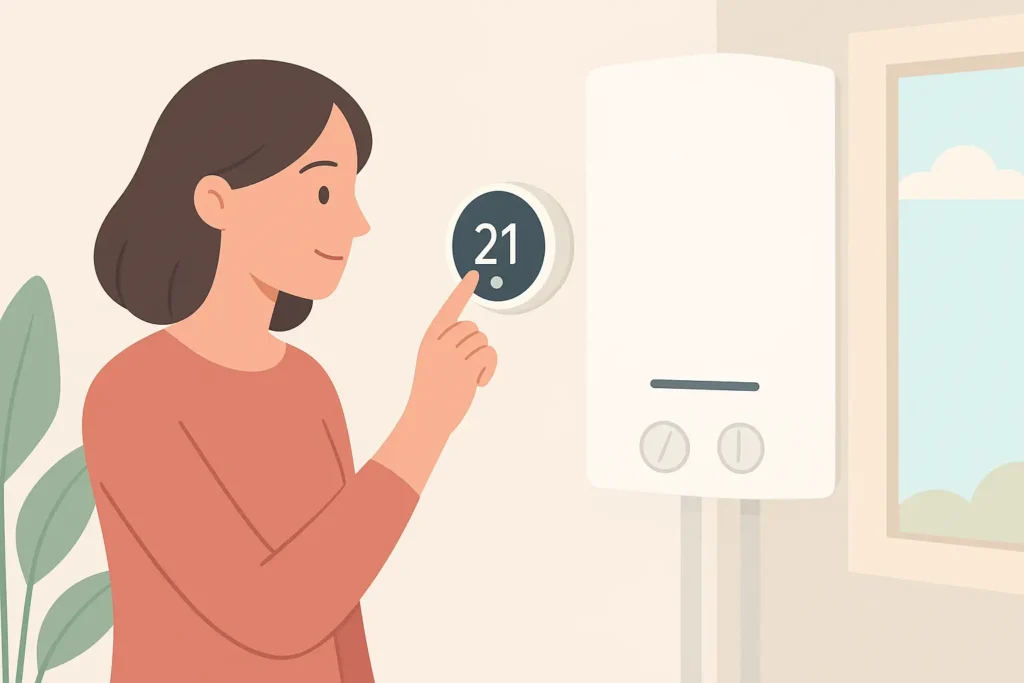
Why your thermostat and boiler need to work together
Modern boilers are designed to be clever. Most new models, especially high efficiency gas boilers, are built to modulate. That means they can adjust their output depending on how much heat your home actually needs.
But they can only do that properly if the controls allow them to.
An older basic thermostat tends to work in a very simple way. It’s either calling for heat or it isn’t. Full on or fully off. Your new boiler can do far more than that, but it won’t get the signal.
Think of it like putting a modern car engine in and then controlling it with a brick on the accelerator. It works, but not efficiently.
Types of thermostats explained
1. Basic room thermostats
This is the traditional dial or small digital box, usually in the hallway. You set a temperature and when the house drops below it, the heating kicks in.
They do the job, but that’s about it. No scheduling beyond a separate timer, no remote access and limited control over how your boiler operates.
2. Programmable thermostats
These let you set different temperatures for different times of the day. For example, warmer in the morning and evening and cooler while you’re at work.
They’re better than basic stats, but they can be fiddly. I often get called to houses in Sawbridgeworth where it turns out the heating “has a mind of its own” when really it’s just been programmed incorrectly years ago and no one wants to touch it.
3. Smart thermostats
Smart controls connect to your WiFi and let you manage heating from your phone. They can learn your routine, adjust based on outside temperatures and in some cases even detect when you’ve left the house.
More importantly, many smart thermostats are designed to communicate properly with modern boilers, allowing them to modulate more efficiently.
The benefits of pairing a smart thermostat with a new boiler
When we install a new boiler in places like Harlow or Bishops Stortford, homeowners often ask whether a smart thermostat is really worth it.
Here’s what I’ve seen in real homes:
- Better control over heating schedules
- The ability to turn heating off if you’re delayed getting home
- Clearer visibility of energy use
- More consistent room temperatures
- Improved efficiency when matched with compatible boilers
One common situation is families with unpredictable routines. Kids’ clubs, shift work, working from home some days but not others. A smart thermostat lets you adjust things in seconds rather than heating an empty house.
It’s not about gadgets. It’s about control.
Compatibility: what works with modern boilers?
Most new boilers from leading manufacturers are compatible with smart controls, but not all thermostats unlock the same features.
Some boilers work best with their own brand of smart controller, allowing advanced modulation and weather compensation. Others integrate well with popular third party smart thermostats.
This is where proper advice matters. I’ve seen cases in Bishops Stortford where homeowners bought a smart thermostat online, only to find it only works as a basic on off control with their new boiler.
If you’re choosing a brand such as Worcester, it’s worth checking which controls are recommended to get the full benefit of the system.
Is it more cost effective to upgrade both at the same time?
In most cases, yes.
When you upgrade your thermostat at the same time as your boiler, the installation is usually more straightforward. The wiring can be adjusted during the boiler swap and everything can be set up and tested in one visit.
If you leave it a year or two, you’re potentially paying for a separate call out and additional labour.
There’s also the performance angle. From day one, your new boiler will be running as efficiently as it can rather than waiting for a future upgrade.
How much could you actually save?
Savings depend on the house, the insulation and how you use your heating.
That said, better controls generally mean less wasted heat. Instead of blasting the house to 23 degrees then opening windows, you can fine tune temperatures properly. Even small reductions in average room temperature can make a noticeable difference over a full heating season.
For larger properties in areas like Sawbridgeworth, or homes with multiple floors, zoning and smarter control can have an even bigger impact.
I’ve had customers surprised at how quickly the improved control changes their habits. When you can see and adjust everything easily, you tend to be more mindful about how you use it.
So, should you upgrade?
If you’re already investing in a new boiler, it makes sense to at least consider upgrading the thermostat as well.
You’ve already decided to improve the heart of your heating system. The thermostat is the brain. Pairing an old control with a new boiler limits what that system can really do.
If you’re unsure what would suit your home, routines and boiler choice, it’s worth having that conversation before installation day. The right advice now can save frustration later.
When you’re planning your installation, ask Harpers about smart controls when booking your boiler installation. The team at Harpers Plumbing & Heating can talk you through what works best for your property and make sure your new system is set up properly from day one.